Friday, February 8, 2008

Better than radar


So, yesterday we're headed to the beach driving along The Queen Kaahumanu Highway (Highway 19) along the western, dry-side, Kohala coast. Very hot, low and open. Nothing around but empty mile after empty mile of lava fields. Then I spot on the left hand shoulder a dark SUV, unmarked but with police lights on it. Check my speed, yep only a hair over the double nickel (55 MPH) but I am being passed by a red Dodge Magnum (a popular tourist rental) going at a high rate of speed. In my rear view mirror I see the cop's SUV start up and peal a "U turn" into our lane and from a half mile or so back start gaining on us with cars pulling over onto the ample paved shoulder to let him pass, as I do when he catches up. Then, far in the distance ahead he pulls over the Magnum. As we pass by we're shocked to see the cop take the guy down, gun drawn and pointed with two arms extended. Pointed at his head! Slow down, yep slow down. I'm not speeding here.

[if you want to send me an e-mail, click here ]

Thursday, February 7, 2008

The Whales


Far out in the distance a cloud of spray rises above the ocean. Was that a wave hitting a reef? Then another and another. Whales breaching the surface as they migrate from their Alaskan homes. In the winter months they are here to breed, and calf, before heading back north in the spring. We must have seen at least 20 whales, a large pod swimming off the eastern shore. Mostly we just see the splash of their jumps or a fountain spray from their blow holes. Only once in a while a glimpse of the huge black mass or a fluke re-entering the sea. But it is exciting. Today they were in close and we could see them like in the top photo above. Beautiful! Everyone on the beach points, the binoculars and telephoto lenses come out, and we all stare to the spot. Something nice to know they are there and thriving in this world. (these are not my pictures, just examples of what we actually saw).
[if you want to send me an e-mail, click here ]

Where have all the birdies gone? (When will we ever learn?)

One would think we would be surrounded by flocks of tropical birds. Sea birds should abound here. But in reality we see only a few sparrow-like birds picking up picnic droppings off the beach and really, little else. A sighting is rare. Sitting out on the back deck here in the town of Waimea, we're surrounded by tropical plants and trees, yet we see far fewer birds than in our snow-covered cedar hedges in Aurora.

What went wrong?
Most of the mammals on the island of Hawaii are feral species; they are not native.
One, the seemingly innocent Indian Mongoose, is as prevalent here as the black squirrel is in Toronto's High Park.

In 1872, W.B. Espeut, a sugar plantation owner in Jamaica, got the idea to introduce the mongoose there in order to keep his rat problem under control. He sailed from Jamaica to Calcutta on a ship aptly called the Merchantman, captured four male and five female mongooses and brought them back across the ocean to Jamaica.

Twenty years later, in a journal article, the enterprising Espeut claimed he was very successful, thereby creating a new Jamaican export for himself. Selling mongooses! When the article reached the sugar cane plantations of Hawaii, the farmers saw an answer to their rat problems. So despite some local dissent, in 1883, the Hawaiian farmers ordered 72 mongooses from the Jamaican. The mongooses were raised on the Big Island and spread amongst the islands. Little did they know or maybe, even worse, they didn't care...

Imagine, He Lied.
Contrary to Mr. Espeut's claims, Mongooses kill very few rats.
Unlike the nocturnal rat, the mongoose is diurnal; they are active during the day! And you can't eat what you don't see. So instead of ridding the islands of night-time rats, the day-time mongooses have found many alternative foodstuff. Only the islands of Lana'i and Kaua'i remained mongoose-free, but on the other islands, the introduction of the little creature has been a disaster of epic proportions.

Over Easy or Scrambled?
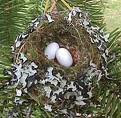
Among many other delicaci
es, they loved the plentiful bounty of the local bird eggs. Mongooses love eggs. They throw the eggs against rocks to break them open and then eat them. The mongooses have preyed on not just the eggs but also fledgling and adult native Hawaiian birds, not to mention endangered sea turtle eggs and hatchlings. Within decades the bird population of the Big Island, Oahu, and Maui were devastated. Of course, other human causes such as logging and farming caused loss of habitat and diseases introduced to the islands have also played a part.

Endangered Species
The Hawaiian Islands can be called the endangered species capital of the world - Hawaii has more native endangered species per square mile than anywhere else on the planet. Of the 71 native bird species, 23 are extinct, and 30 are endangered or threatened. The native state bird, the Nene, (an obvious cousin of the Canada goose) had it's population devastated and reduced to about 30 birds on the big Island at one time. Their population has now been protected, reintroduced, and grown but only in significant numbers on the mongoose-free islands.

If one wants to see flocks of tropical birds, you have to head to the island of Kauai where, I am told, the difference is staggering.

Most birds are Ha'ole, like us
The colourful Brazilian red breasted cardinal which can be seen in various areas
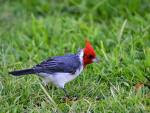
around the island is a 1930's introduction and although interesting, like so many of the other recent additions, is not native to Hawai'i.

More species of birds have been introduced here than anywhere else on earth - at least 142 species of birds, from six continents since 1850, many to replace the devastated native populations. Around 54 of these introduced species have established breeding populations on the islands. But they survive only in small numbers and even then mostly only in secluded, little publicized, bird sanctuaries around the islands.

[if you want to send me an e-mail, click here ]

Wednesday, February 6, 2008

A Day at the Beach

We have been reading about the huge snow fall in Toronto with even more on the way. Such guilt mixed with gloat. What can I say? A snowy street in Toronto or a tropical beach in Hawai'i? Snowy and cold - Sunny and warm? Decisions, decisions.

This morning we headed to the Mauna Kea (mega) resort. It's one of the many huge resort developments with hotels, condo apartments, townhouses, villas and exclusive multi-million dollar mansions all built around a luxury golf course, tennis courts and shopping malls.

By American law all ocean shoreline must be open to public access. To get around letting hoards of "riff-raff" in the huge resorts limit the parking access. So getting there early gives you a parking pass and access to the great beaches. BONUS - the Manua Kea hotel in the complex is closed because it was severely damaged in the Oct. 15th 2006 earthquake and still not repaired. Hence, there are very few people on the beach. We spent three hours there with many enjoyable swims and Sue enjoyed walking the length of the beach. Then up to the little port town of Kawaihae to the Hamakua Macadamia Nut Factory where we purchased a bag of the the local delicacy. Sue sends her regards and condolences to those in Toronto.

Monday, February 4, 2008

The Voyage


<---- Sunday Feb. 3 we drove to Buffalo and spent the afternoon doing a little shopping then Mike watched the (Dallasless) Superbowl at our hotel, the Comfort Inn near Buffalo Airport where we stayed and parked our car for the month - great deal.

Up very early Monday morning to get the shuttle to the nice little Buffalo airport for our 6:50 commuter flight to Chicago. Since we crossed the border into the USA yesterday there is no customs check at the airport making the boarding a lot quicker and easier. A short flight and we're in O'Hare airport for breakfast and a reasonable two hour wait for the substantially longer flight out to Honolulu. One interesting aspect of O'Hare airport, which is a transportation crossroads, is the large number of young kids (18-19?) in sailor and soldier uniforms. At first I thought they were part of a Sea Cadets' trip then realized of course, these were the fighters for democracy and freedom in the world.

The flight from Chicago is about ten hours. Activities consisted of reading popular novels, watching second-rate movies, and doing more Sudokus and Crossword puzzles than I want to think about. Oh yes, then there is the food "service" - wanna buy a box lunch of packaged commercial goodies? Yep, for five bucks, at least it is something to do. More packaging to unravel than food to eat but it passes the time...

Getting closer to Hawaii and the expectation of the tropical warmth heightens our activity. Put away the books and pens, check the glasses making sure Mike does not leave his in the airplane again then gawk out the window at endless expanse of ocean until some speck of land pops into view. What do we recognize? Is THAT Maui? See Pearl Harbor? Then we're on the ground hoping the ten hour rigidly tightened knees and nearly-paralyzed legs still work and that blood will flow to those unused muscles. Can we walk off the plane with dignity? LOL! Yep - and there it is - Honolulu airport with it's rain forest jungle waiting area.

A reasonable one hour stop in Honolulu then connect to an Aloha Airlines inter-island flight to Kailua-Kona. The bus-like "first-come-first-served seating" flight goes quickly as the attendants pass out the little plastic cups of syrupy sweetened Passion Fruit juice. Something else to unwrap and pass the time. The short flight comes to an end as we deplane in Kailua-Kona down a ladder walkway to the tarmac and out to the baggage area that is just a small covered pavilion. There is no airport as we know it here. Just a parking lot, runway and baggage pavilions. The weather is fantastic; a comfortable 75 degrees with clear skies and the sun setting in the western ocean.

Betty is waiting for us and we load up her car, accept our lei's and head up to Waimea. Tired and jet-weary we talk, have a little dinner, then it's off to sleep ... in paradise.

[if you want to send me an e-mail, click here ]

Sunday, February 3, 2008

United Airlines: On-Line Check In

Woke up this morning and decided to log on to the computer to catch the last few e-mails - do a Sudoku and general waste a little time until Sue woke up. BUT! There was an unexpected e-mail from United Airlines. The ability to "check in" online 24-hrs ahead of takeoff and avoid those annoying airport queues. You know the ones; where everyone shuffles ahead in line kicking their luggage along, watching intently as an agent is free "hey, you're next; she's free" - watching the clock, time is running out. Well by stepping through their web pages we can check-in, get our boarding passes for all three flights right through to our destination, print them out at home, and see our seat assignments and change them if required. So I checked the web site, seatguru.com , for our plane and it's seating anomalies. (no change - good seats). Ya' gotta' luv da' Intanet! Now we will see Monday morning how well this on-line check in service works. Hope they really will have seats for us.

Saturday, February 2, 2008

Hawaiian History

A Brief History
The first inhabitants to set foot here sometime around 500 AD were Polynesians from the Marquesas Islands looking for new land and new beginnings. 500 years later the Tahitians also discovered these beautiful islands, and through the entire 13th century thousands of immigrants from Tahiti made the long, perilous journey across the Pacific Ocean to Hawaii. The Polynesian navigators sailed small, double-hulled canoes built with simple stone, bone and coral tools, seaworthy enough to embark on voyages of over 2,000 miles. Navigating without instruments, these ancient seafarers depended only on their observations of the ocean, the sky and traditional knowledge of natural phenomena to explore, and eventually settle all of the Pacific islands in an ocean area of 10 million square miles.

The British are coming The British are coming

In 1778, the famed British explorer Captain James Cook arrived in this paradise, and he named this yet uncharted archipelago the Sandwich Islands, in honor of the Earl of Sandwich. Captain Cook was first revered as a God (of sorts) by the natives, but later when he returned and overstayed his welcome, was stabbed to death on the Big Island. Shortly thereafter, the reign of 'King Kamehameha the Great' began. He established a monarchy, united the islands into one great kingdom [because he alone had access to British guns] and began trading with western ships. Soon the potential bounty of Hawaii spread far and wide.

Whaling
By the early 1800's whaling ships were anchored in Hawaiian ports as the islands were now ground-zero for the Pacific Ocean whaling industry. Hundreds of ships and thousands of crew brought new money, lax social values and disease. Christian missionaries would later introduce religion and much-stricter social morals in an attempt to curtail the somewhat pagan lifestyle then common throughout the islands - and for the most part - they succeeded.

Hawaii - an independent country
The eight stripes on the Hawaiian flag represent the eight islands that were now under one sovereign. The Union Jack represented the friendly relationship between England and Hawai'i. It was England and France that formally recognized the Hawaiian Kingdom as an Independent State and admitted her into the Family of Nations on November 28, 1843.

The Plantations
In
the mid-1800s, Hawaii's sugar industry was established, and because many original natives were now dead, and others refused to work in manual-labor, plantation owners brought in foreign workers from China, Japan, Portugal, and the Philippines. The sugar ships crowded Honolulu harbor in the mid to late 1800's.

The wildly successful plantation owners desired sanctuary from outsiders, so they petitioned the U. S. for protection. After years of negotiation with the United States a treaty was signed, American dollars flooded into the islands and Hawaii found the golden-ring of prosperity. In 1893, foreign commercial interests were the primary catalyst for ending the Hawaiian monarchy. Much to the dismay of Queen Liliuokalani and others, the last Hawaiian queen was deposed by force [American Navy] and one year later the Republic of Hawaii was established. In 1900 Hawaii became a territory of the United States. To protect its commercial interests the U.S. Navy established its Pacific Ocean headquarters at Pearl Harbor. This ingredient of stability helped the islands prosper; the pineapple industry flourished, and cattle ranching and tourism grew into important economic factors.

"A Date that will live in Infamy"

On December 7, 1941, Japan attacks Pearl Harbor bringing the US into WWII. ...yada yada yada ... On August 21, 1959, Hawaii was accepted as the 50th state; statehood brought development and subsequently transformed Hawaii into a major tourist destination and a powerful economic force in the Pacific Ocean.


Sovereignty

The return of Hawaiian sovereignty is once again on the political front-burners of many sons and daughters of native Hawaiians. In s
hort, they want all of their islands back, [ Yea, that'll happen] and some even want the traditional monarchy re-established.

[if you want to send me an e-mail, click here ]